


Xpact GOV
Incoming mail automation for local authorities:
Efficiently processing emails, postal mail and beBPo
Local government offices receive numerous e-mails, beBPo messages, and scanned letters every day, which must be manually reviewed, sorted, and forwarded without automated mail processing. Our solution fully automates this mail processing and assigns content directly to the appropriate departments, mailboxes, and specialized procedures.
Challenges in processing incoming mail in government agencies
In many local authorities, the processing of postal mail, emails, beBPo messages and attachments still takes place without automated incoming mail processing. Incoming content is unstructured and must be manually recorded, assessed and assigned to the correct cases, mailboxes or specialist procedures. Without TR-RESISCAN-compliant incoming mail automation, there is no standardised, audit-proof structure for email and document processing, which leads to delays in forwarding, increased coordination efforts and inefficient mailbox management.
Significant manual effort required during screening
Difficulties in classifying emails and attachments
Delayed forwarding to the appropriate case worker
Significant effort required for coordination in mailbox management
Lack of transparency in the inbox and in ongoing processes
Here's how automated incoming mail processing works:
All incoming emails—including attachments—as well as beBPo messages and documents from the administration’s scanner are monitored, parsed, and intelligently classified by our software. The system reliably identifies the type of document or message—such as applications, immigration files, official notices, or general inquiries.
The messages are then automatically routed to predefined mailboxes and assigned to the appropriate staff members. The rules for this process are customized. Each message is assigned directly to the correct case without the need for manual review or forwarding. This reduces processing times and minimizes the risk of misassignments.
Email content and attachments can be processed separately as needed. If the message body and the attachment contain different information, they are automatically separated and classified and forwarded correctly. This ensures that all relevant information remains structured, clearly assigned, and traceable at all times.
Possible automation of incoming mail processing (beBPo) for local government:
1. Incoming Documents
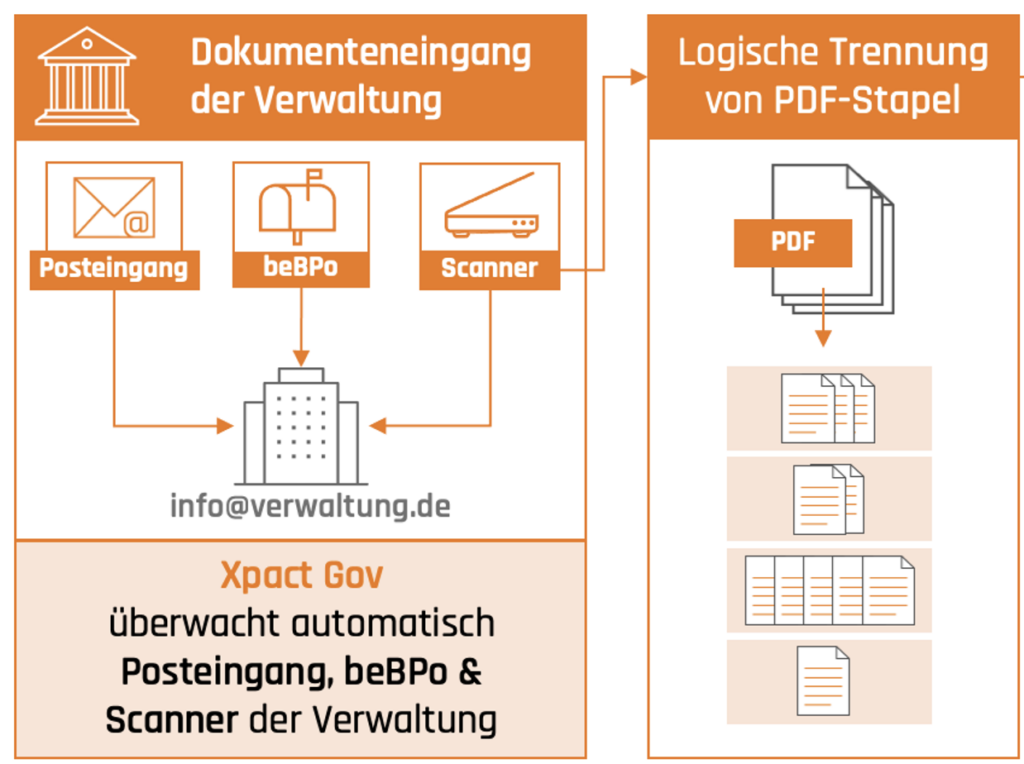
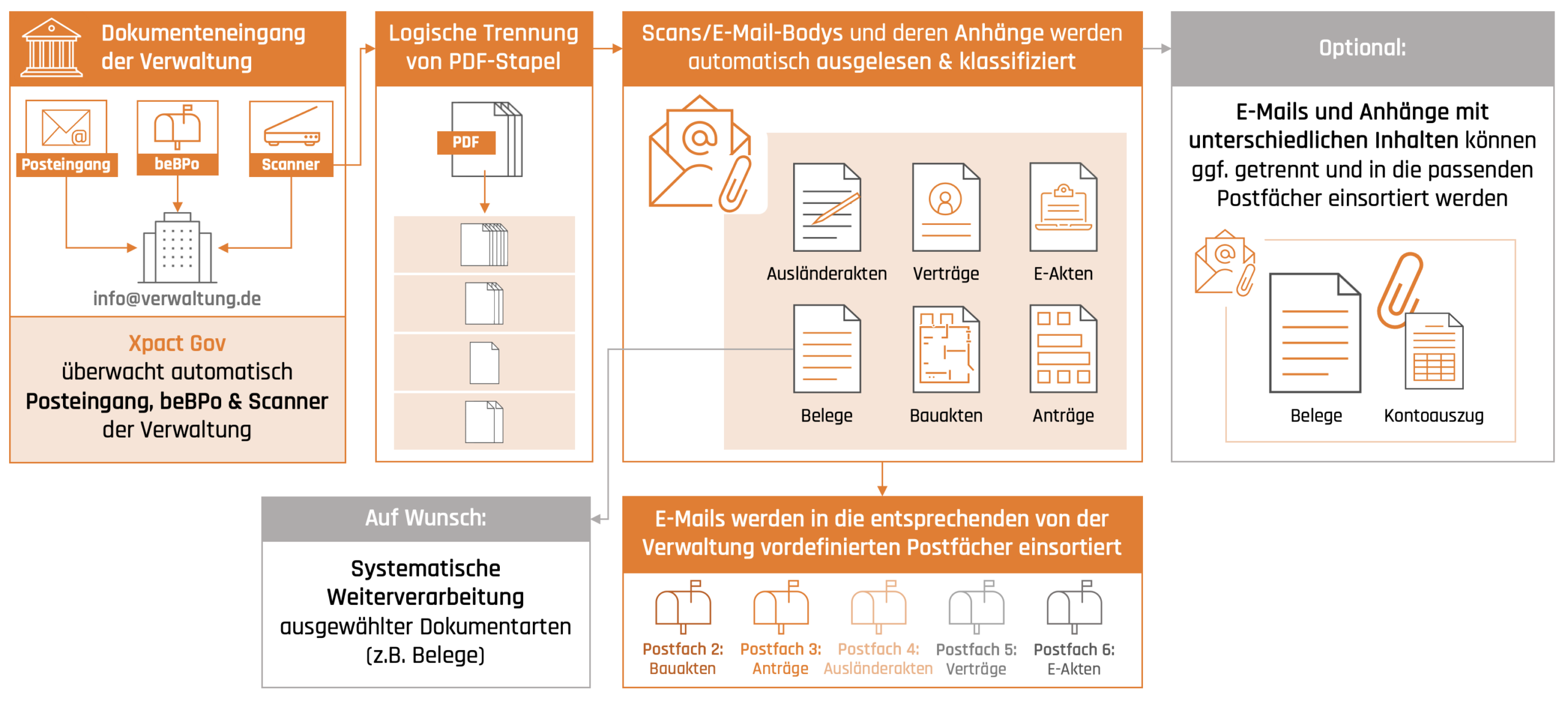
E-mails, letters, beBPo messages, and documents are centrally captured by Xpact Gov and automatically monitored in the administration’s inbox/scanner.
Before the next step, the scanned letters are automatically split into logical PDF batches.
2. Analysis & Classification
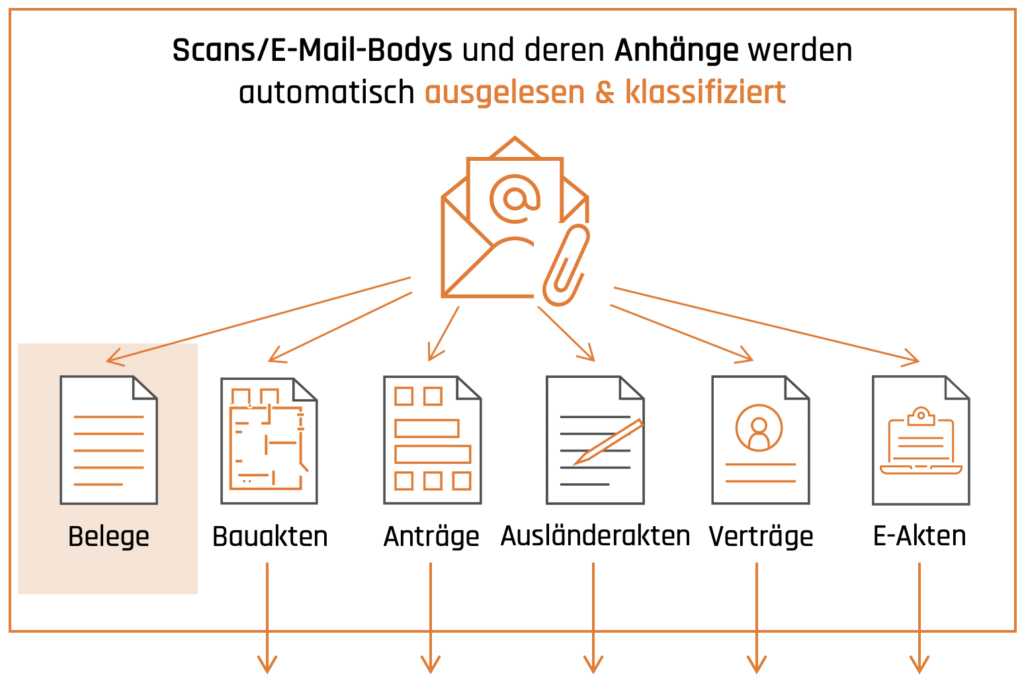
All content is read and classified. Batches of PDFs are logically separated in advance. The system recognises document types such as applications, foreign nationals’ files or notification letters and categorises them accordingly.
3. Automatic assignment
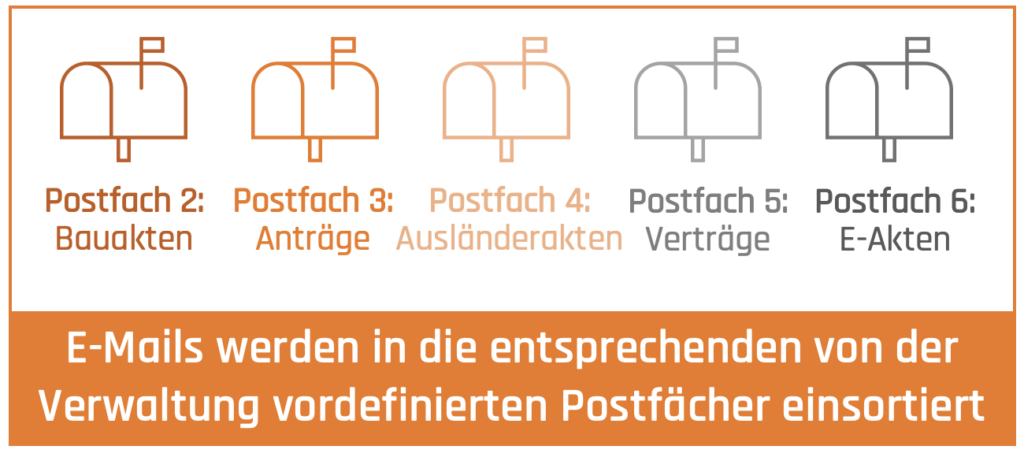
The recognized content is automatically assigned to the appropriate inboxes, responsible parties, and departments— without the need for manual review or forwarding.
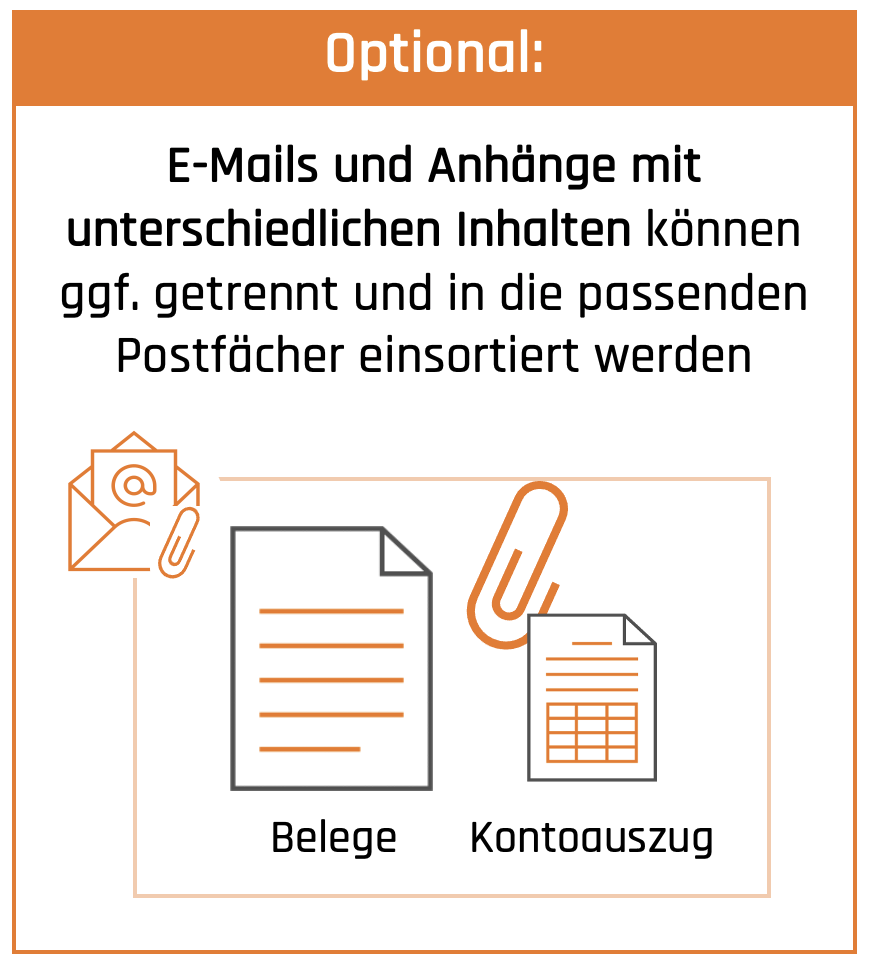
4. Separation of content (optional)
Email content and attachments can be processed separately. Different types of information are automatically separated and correctly assigned.
5. Integration & Further Processing
Relevant data is organized and integrated into existing business processes and systems, where it can be processed directly.
Maximum security for your documents
Your data protection is our priority. Your highly sensitive data is in safe hands with us.

100% GDPR compliant
We ensure that your data is protected, treated confidentially and processed in accordance with the strictest EU standards.
SOC 1 Type 2 certified
Maximum process reliability through verified access controls, low risk of data loss or security breaches.

AI „Made in Germany“
Our software is developed in-house: your data remains in Germany and is not passed on to third parties.
The Benefits of Incoming Mail Automation for Administrative Operations
Automated incoming mail processing is a key component of modern e-government structures and supports the TR-RESISCAN-compliant, secure, seamless and structured processing of incoming content.

- Faster and more organized processing of incoming mail
- Reducing the administrative burden of reviewing and assigning documents
- Faster response times to citizens' concerns
- Reducing errors in classification and routing
- Transparent tracking of processes and responsibilities
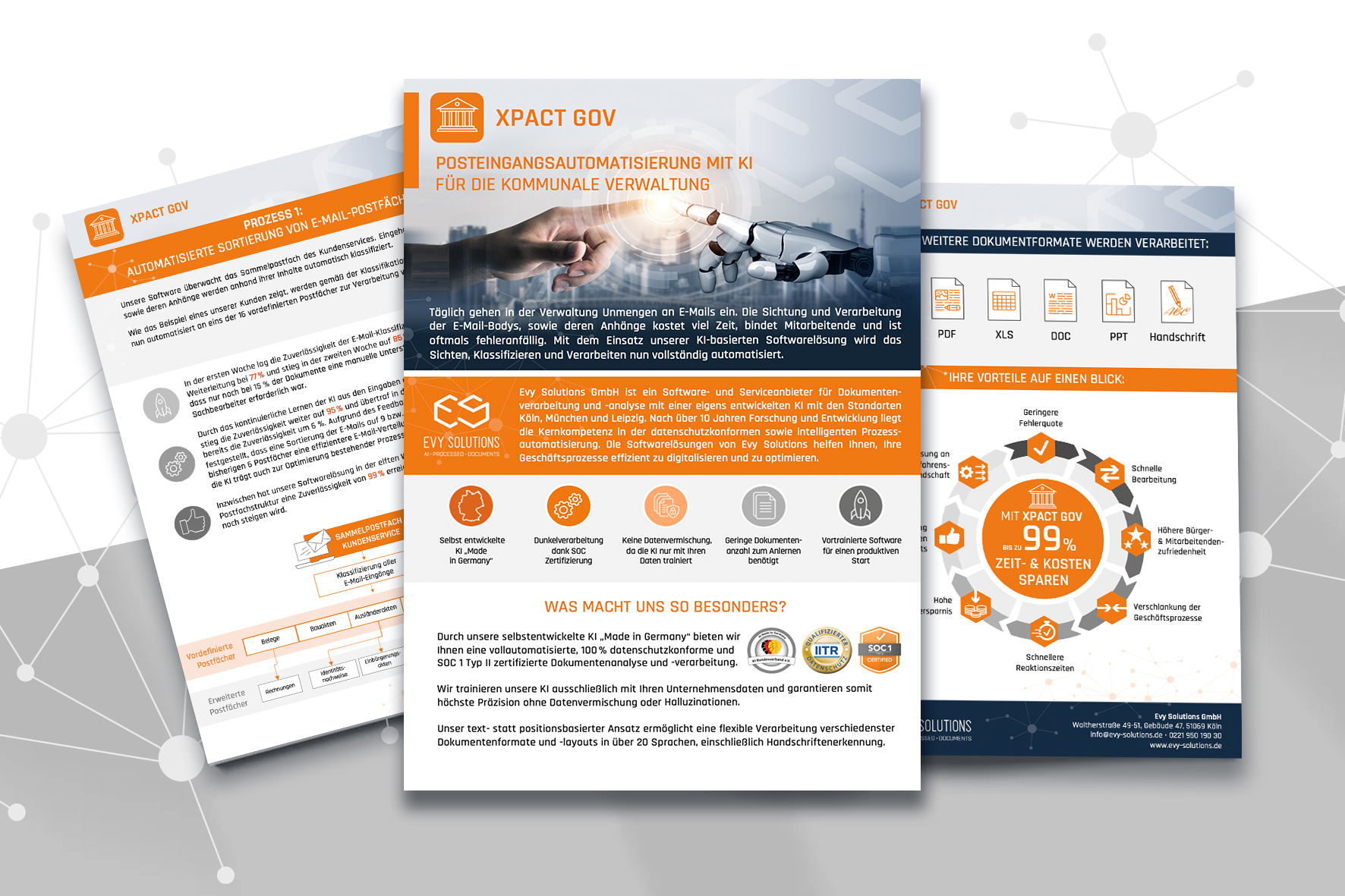
Find out more about inbox automation with Xpact Gov and download our product information now:
Frequently asked questions about incoming mail automation in public administration
How does incoming mail automation work with Xpact Gov in government agencies?
Our Xpact Gov software solution automates incoming mail processing by capturing content from various channels, such as email, beBPo, and scanned paper mail. The documents are automatically reviewed, separated if necessary, classified, and routed to the appropriate mailboxes, departments, and workflows, eliminating the need for manual forwarding.
Which input channels can be processed automatically?
In addition to emails and beBPo messages, Xpact Gov can also automatically process scanned mail. The software monitors all incoming documents received by the administration and ensures that all incoming documents are processed and assigned consistently, regardless of the channel.
How should emails and attachments be correctly categorised?
Emails and their attachments are analysed together and processed separately where necessary. This enables different types of content within a single message to be correctly classified and assigned to the appropriate processes, mailboxes or departments.
Can the assignment to mailboxes be controlled on an individual basis?
Yes, messages are routed based on the rules you have customized with Evy Solutions. Main and sub-mailboxes, as well as responsibilities, can be defined by the administration and adjusted at any time, ensuring that incoming mail processing aligns perfectly with existing workflows.
How is integration into existing specialist systems carried out?
Optional und auf Wunsch können die verarbeiteten Dokumente und Daten nach der Postfachzuordnung direkt in bestehende Fachverfahren, DMS- oder ERP-Systeme überführt werden. Dadurch stehen alle Informationen ohne Medienbruch im jeweiligen System zur Weiterverarbeitung zur Verfügung.
Do you have any questions?
We’re happy to help. Please contact us!